
ŚĀSTRA


ŚĀSTRA
Śāstra means any discipline or faculty of knowledge, or any science. The word Śāstra also denotes religious or sacred treatise, sacred book or scripture of human origin and is also referred to as Smṛti (स्मृति) – that which is remembered.
The language of Śāstra texts is primarily Sanskrit. Influence of Sanskrit is evident on the Indian society at large, as this has been the inherent language of Indian cultural and religious ethos since ancient times. Two or three centuries after Vedic texts were written, other languages such as Prākṛta (प्राकृत) and Pālī (पाली) emerged. Many early scriptures of Jainism were written in Prākṛta or Ardhamāgadhī (अर्धमागधी). Most of the early Buddhist texts were written in Pālī language. Subsequently, various sublanguages such as Māgadhī (मागधी), Śakārī (शकारी), Vakārī (वकारी), etc., emerged. Forms of some of these sublanguages or Upabhāṣā (उपभाषा) have been used by Kālidāsa (कालिदास), Śūdraka (शूद्रक), Bhavabhūti (भवभूति), etc., in their compositions. Many modern Indian regional languages may have been derived from Prākṛta and Apabhraṃśa (अपभ्रंश). For instance, Marathi is known to have derived from Marahaṭṭī (मरहट्टी) or Mahārāṣṭrī (महाराष्ट्री), a kind of Prākṛta.
The Śāstra literature includes:
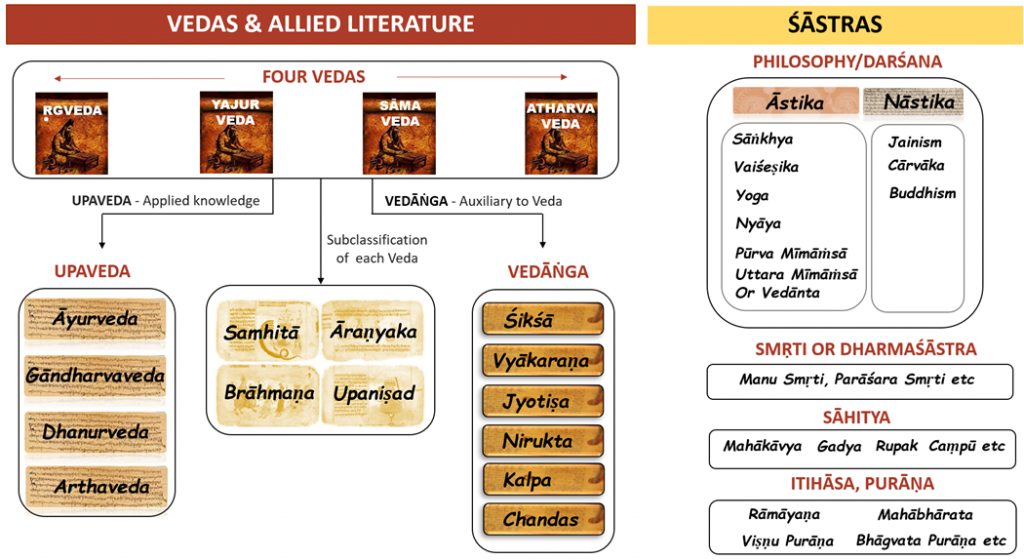
Philosophy or Darśana, Smṛti or Dharmaśāstra, Sanskrit Sāhitya, Itihāsa – Purāṇa
Philosophy or Darśana (दर्शन)
Based on allegiance to Vedas, two categories of Philosophy or Darśana developed.
- Āstika Darśana (आस्तिक दर्शन) accepted the authority of Vedas. It includes – Sāṅkhya (सांख्य), Vaiśeṣika (वैशेषिक), Yoga (योग), Nyāya (न्याय), Pūrva Mīmāṁsā (पूर्व मीमांसा), and Uttara Mīmāṁsā (उत्तर मीमांसा) or Vedānta (वेदांत).
- Nāstika Darśana (नास्तिक दर्शन) did not accept the authority of Vedas. In the Nāstika Darśana category there are three main schools of philosophy: Jainism, Cārvāka (चार्वाक) and Buddhism.
Smṛti (स्मृति) or Dharmaśāstra (धर्मशास्त्र)
Smṛti (स्मृति) or Dharmaśāstra (धर्मशास्त्र) is a genre of Sanskrit theological texts which refer to the treatises dealing with human conduct vis-à-vis family, society and country. It includes the body of traditional, civil, and religious code of laws. Eg Manusmṛti (मनुस्मृति), Parāśarasmṛti (पराशरस्मृति), Yājñavalkyasmṛti (याज्ञवल्क्यस्मृति), etc.
Sanskrit Sāhitya (संस्कृत साहित्य)
Sanskrit Sāhitya (संस्कृत साहित्य) or Sanskrit literature, which is over 5000 years old, is an ever-evolving tradition and is unprecedented in the world literature in its richness and diversity. It can be broadly categorized as Mahākāvya (महाकाव्य) or epic poetry, Rūpaka (रुपक) or plays, Gadya kāvya (गद्यकाव्य) or prose literature, Khaṇdakāvya (खण्डकाव्य) or small poems and Caṃpū (चंपू) Literature.
Itihāsa (इतिहास) - Purāṇa (पुराण)
The word Purāṇa means “ancient or old”. Purāṇas are considered to be tales of the past legends, ancient or legendary history (Itihāsa), and genealogy of dynasties.